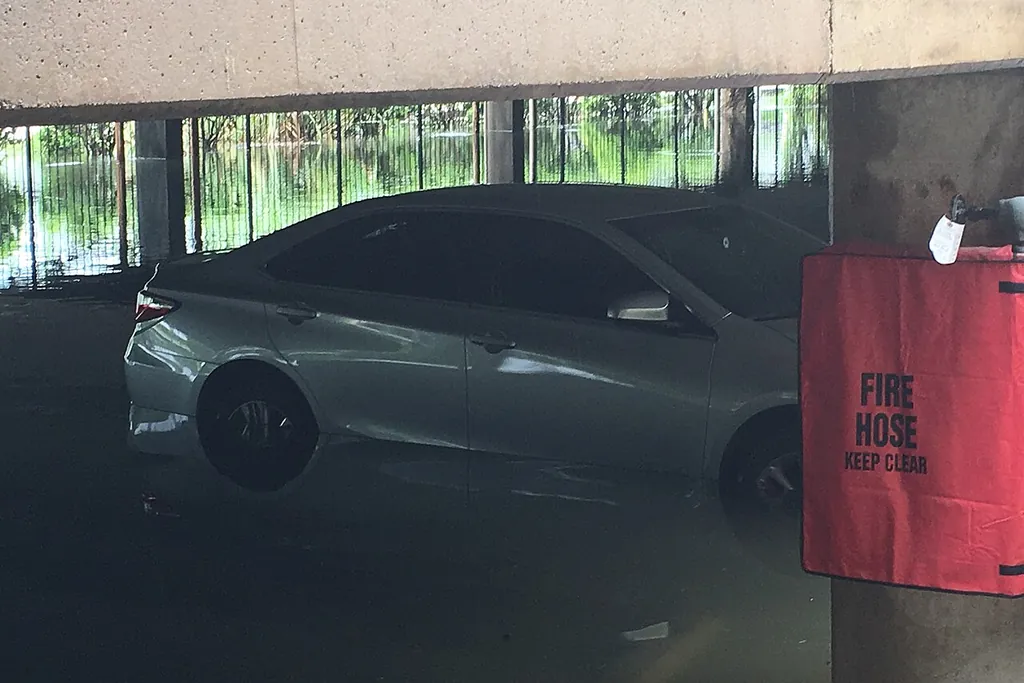
First: do not try to start it
If water got into the cabin or came up over the bottom of the doors, do not try to start the car. Water in the engine can bend parts when it cranks. Water in the wiring, connectors and computers can short things out the moment power is applied.
Disconnect the battery if you can do it safely, negative clamp first, and have the car looked at by a repair shop and your insurance company.
Salt water is worse
Storm surge around Clear Lake, Kemah, Seabrook and Galveston brings salt water. Salt water corrodes wiring and connectors quickly and the damage often shows up weeks later. A car that sat in salt water is often a total loss even if it runs.
When a battery is all it needs
Sometimes the car did not flood at all. It just sat for days through a storm and a power outage, maybe with a phone charger or dash cam running. That kind of car often needs only a charge or a new battery. We test it and tell you which.
Before the next storm
- Move vehicles to higher ground or a parking garage when a storm is coming. Many Houston garages open to the public during flood warnings.
- Do not drive through standing water. Turn around.
- Keep the battery healthy going into hurricane season, and test it if it is older than three years.
How we can help
If the vehicle stayed dry and just will not start, call us. If water got into it, call your insurer and a repair shop first. We will tell you honestly which situation you are in.
Related questions
Can I jump a car that was in a flood?
Not until it has been checked. Water in the engine or wiring can cause serious damage when the car is powered up.
My car did not flood but will not start after the storm. Is it the battery?
Often. Days of sitting and accessories left on can drain it. We test and tell you.